
Builder Rootcamp - Week 1: Zero to Hero on Rootstock
Orientation, blockchain nodes, and the technical foundations behind building on Bitcoin with Rootstock

Why Week 1 Matters
The first session made one thing clear: Builder Rootcamp is not a passive course. It’s a time-bound, hands-on program designed to take developers from fundamentals to a production-ready capstone by the end of the cohort. Progress here is measured by shipped work labs, pull requests, and a functional dApp, not by attendance alone
The reality check came early: this isn’t a bootcamp you watch it’s one you survive by shipping. From day one, Rootcamp makes it clear that progress is measured in pull requests, not notes taken.

How Builder Rootcamp Is Structured
Rootcamp follows a strict weekly rhythm:
One learning module per week on Thinkific
Live review sessions every Monday
Ecosystem partner sessions every Thursday
Hands-on labs submitted via GitHub PRs
Weekly deadlines every Sunday
This hybrid model of self-paced learning, combined with live technical deep dives, ensures theory is immediately reinforced through practice
Technical Foundations Covered in Week 1
1. Client–Server vs Peer-to-Peer Networks
We started by contrasting traditional client–server architectures, where control is centralized, with peer-to-peer (P2P) networks, where nodes act as both clients and servers. This distinction is fundamental to understanding why blockchains and Rootstock specifically behave the way they do

I’ve seen client–server vs P2P diagrams before. What clicked here was realizing that every design shortcut I’ve taken in Web2 quietly assumes a server will “fix it later” On Rootstock, there is no later.
2. Blockchain Networks & Distributed Computation
The sessions walked through what makes blockchain networks unique:
Asynchronous, probabilistic consensus
A shared ledger with immutable transactions and mutable state
Trade-offs explained through the CAP Theorem
We also explored how blockchains relate to (and differ from) general distributed systems, particularly in terms of redundancy, consensus selection, and full public auditability.
3. Understanding the Rootstock Blockchain
Rootstock’s design sits at the intersection of Bitcoin and Ethereum:
Bitcoin layer:
Merged mining (Rootstock is secured by Bitcoin miners)
PowPeg enabling a trust-minimized BTC ↔ RBTC 1:1 peg

Ethereum compatibility:
JSON-RPC interface
Full EVM compatibility (same bytecode, different security model)
This architecture allows developers to deploy Solidity smart contracts while inheriting Bitcoin’s security guarantees without being an Ethereum L-2 .
This was the moment Rootstock stopped feeling like “Ethereum-compatible” and started feeling like “Bitcoin-constrained” Same tools, heavier consequences.
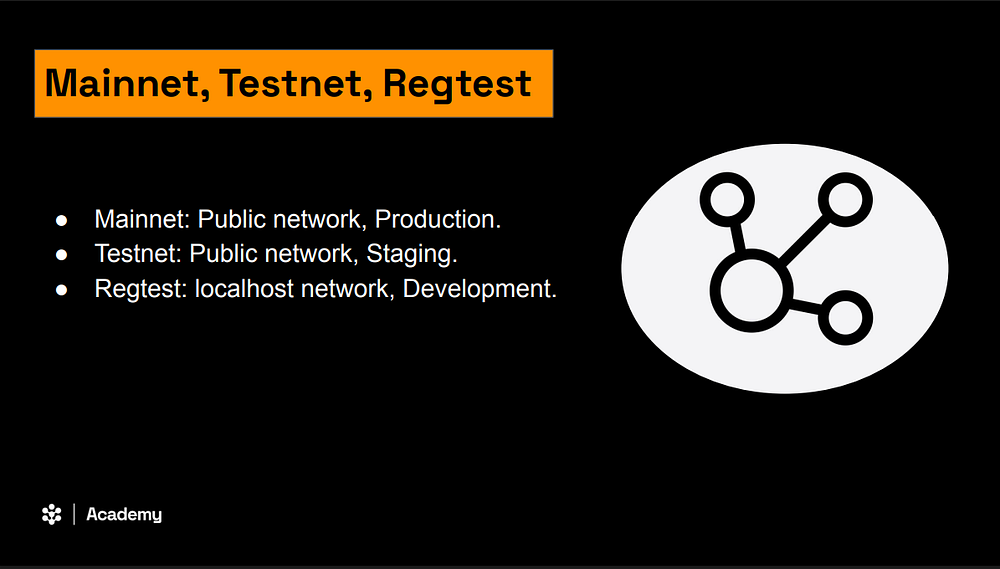
4. Networks, Nodes, and Environments
We covered the practical environments developers will use:
Mainnet — production, real value
Testnet — staging, no real value
Regtest — local development
We also introduced the RSKj node, Rootstock’s reference node implementation, and how nodes fit into the broader Rootstock network.
5. Smart Contract Platforms & Tooling
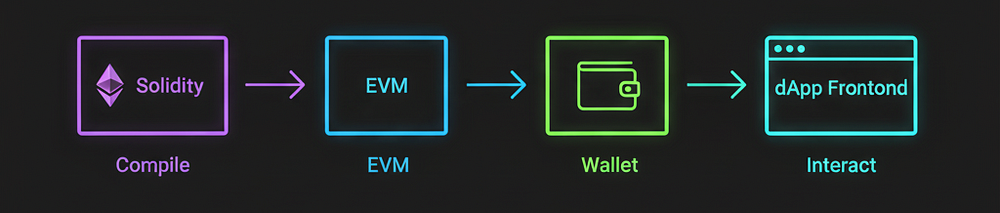
Week 1 closed by framing the smart contract stack:
Solidity → compiled to bytecode + ABI
Executed by the EVM
Accessed via wallets and client libraries (ethers.js, wagmi, viem)
Built and tested using tools like Hardhat, Foundry, Remix, and Tenderly
This context sets the stage for the deeper Solidity, testing, and security modules coming next.
What I’m Taking Forward
Two things stood out this week:
Infrastructure is not abstract on Rootstock nodes, mining, and consensus directly affect how applications behave.
Rootcamp is optimized for builders who ship, not just learn.
Before the next live session, the focus is on completing Modules 1 and 2 on Thinkific and getting fully comfortable with the Rootstock development environment.
What’s Next
Week 2 dives deeper into blockchain nodes on Rootstock how infrastructure, RPC choices, and node behavior directly impact reliability when you’re building on Bitcoin.
After understanding the foundations in Week 1, the focus now shifts from what Rootstock is to how it actually runs.
Connect with me on this journey:
GitHub: tusharshah21
X (Twitter): Sharing Rootstock + Web3 learnings in real time
Hot take:
If you don’t understand the infrastructure your smart contracts run on, you’re not building on Bitcoin you’re just deploying code and hoping it holds.
Question for fellow Rootcampers:
What was the first assumption about blockchain infrastructure that Rootcamp already challenged for you?
Ready to start building on Rootstock? Here’s how you can get involved today:
📖 Explore the Docs – Get started with Rootstock development.
🏆 Check out the Hacker Hub – Learn about past hackathons and upcoming opportunities.
💰 Contribute and Earn with Hacktivator – Build or create content and earn up to $1,000 per contribution.
💬 Join the Community – Connect with other builders on Discord.


