
Builder Rootcamp - Week 12: Certified
The Last Week, The Permanent Credential, and What Comes Next

Some endings feel like doors closing.
This one felt like a door opening.

Week 12 was graduation week for the Rootstock Builder Rootcamp - Cohort 2026-Q1.
No new modules. No new deadlines.
Just the closing session, the final steps, and something that no other course I've completed has done:
A certificate that lives on-chain.
Permanently. Immutably. On the same network I spent twelve weeks learning to build on.
The Closing Session
The session opened with two words:
Congratulations, Rootcamper
You are now a Rootcamp Certified Builder.
Twelve weeks compressed into one sentence.
And somehow despite having seen it coming for weeks it still landed differently when it arrived.
The session wasn't a recap. It wasn't a lecture.
It was a handoff.
Here's what you built. Here's what you earned. Here's what's next.
32 Builders. 32 Projects.
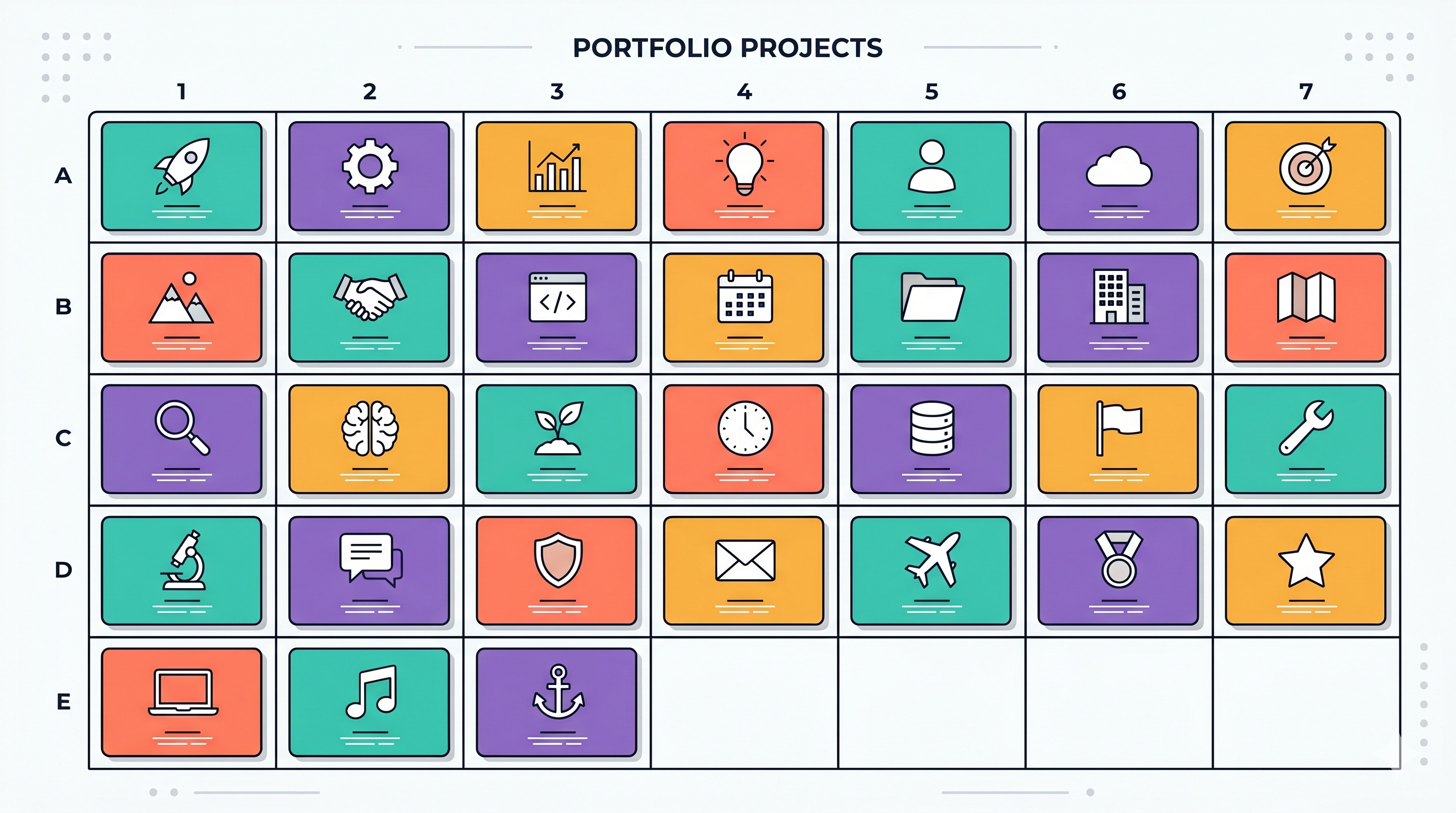
One of the most grounding moments of the closing session was seeing the full cohort board.
Cohort 2026-Q1. 32 total projects.
Every builder. Every GitHub repo. Every idea that got claimed, built, reviewed, and shipped.
Looking at that table, two things hit simultaneously:
First - the range of what people built. Salary vaults, lending protocols, donation trackers, escrow systems, ticketing platforms, signal registries. All on Rootstock. All from scratch.
Second - the fact that every single one of those projects started as an idea on a form and ended as deployed, verified, on-chain code.
That's not a small thing.
Two Projects That Stood Out
The closing session highlighted two projects from the cohort:
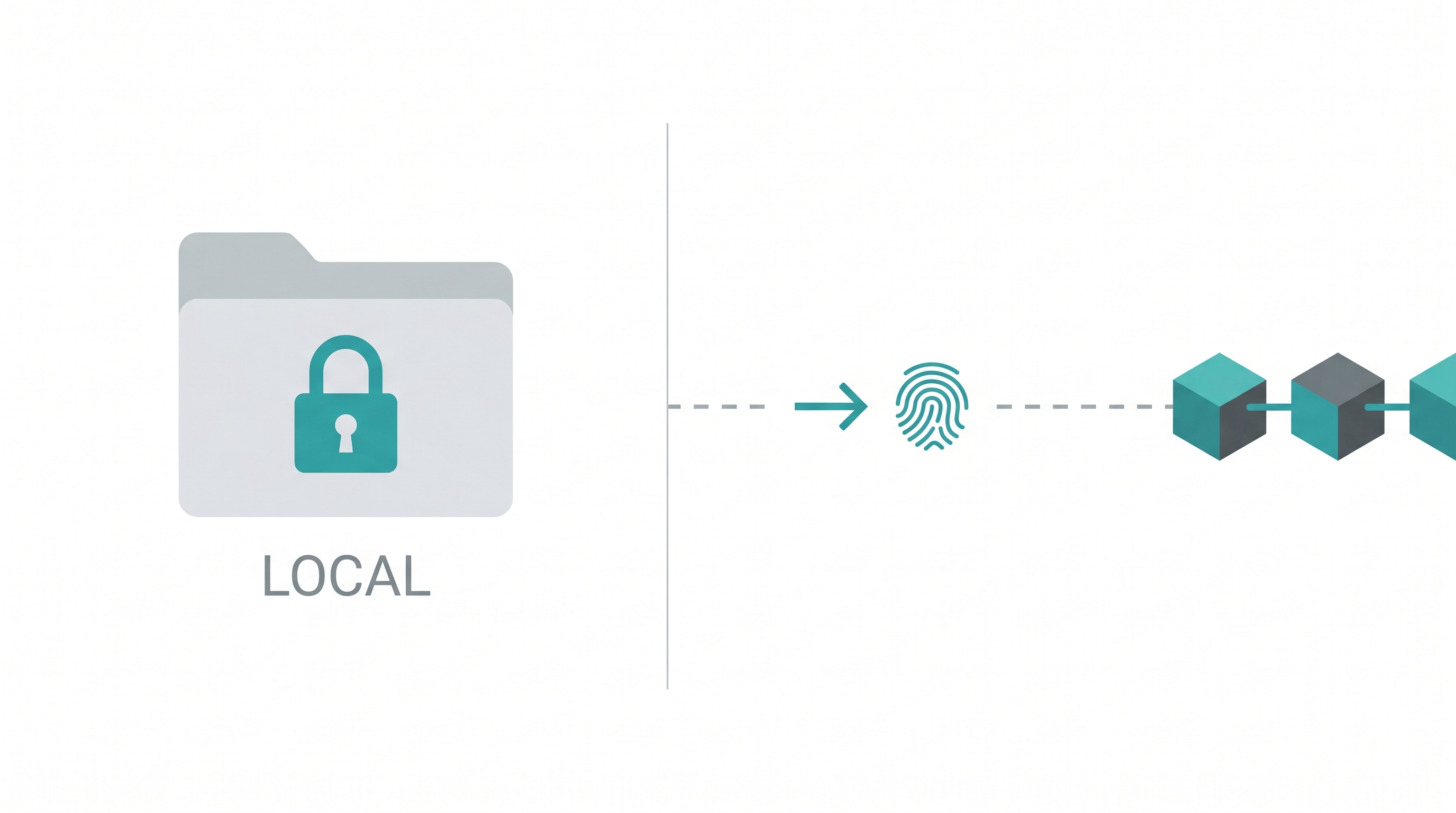
Trustless Author Notarizer — by Jekayin-Oluwa
A dApp that hashes text or files locally in the browser and anchors proof-of-existence on-chain.
No admin. No mutable state. No content ever leaves the client.
Only the fingerprint gets transmitted.
The elegance of it: the thing being proved never touches the network. Only the proof does.
That's blockchain primitives applied with real design thinking.
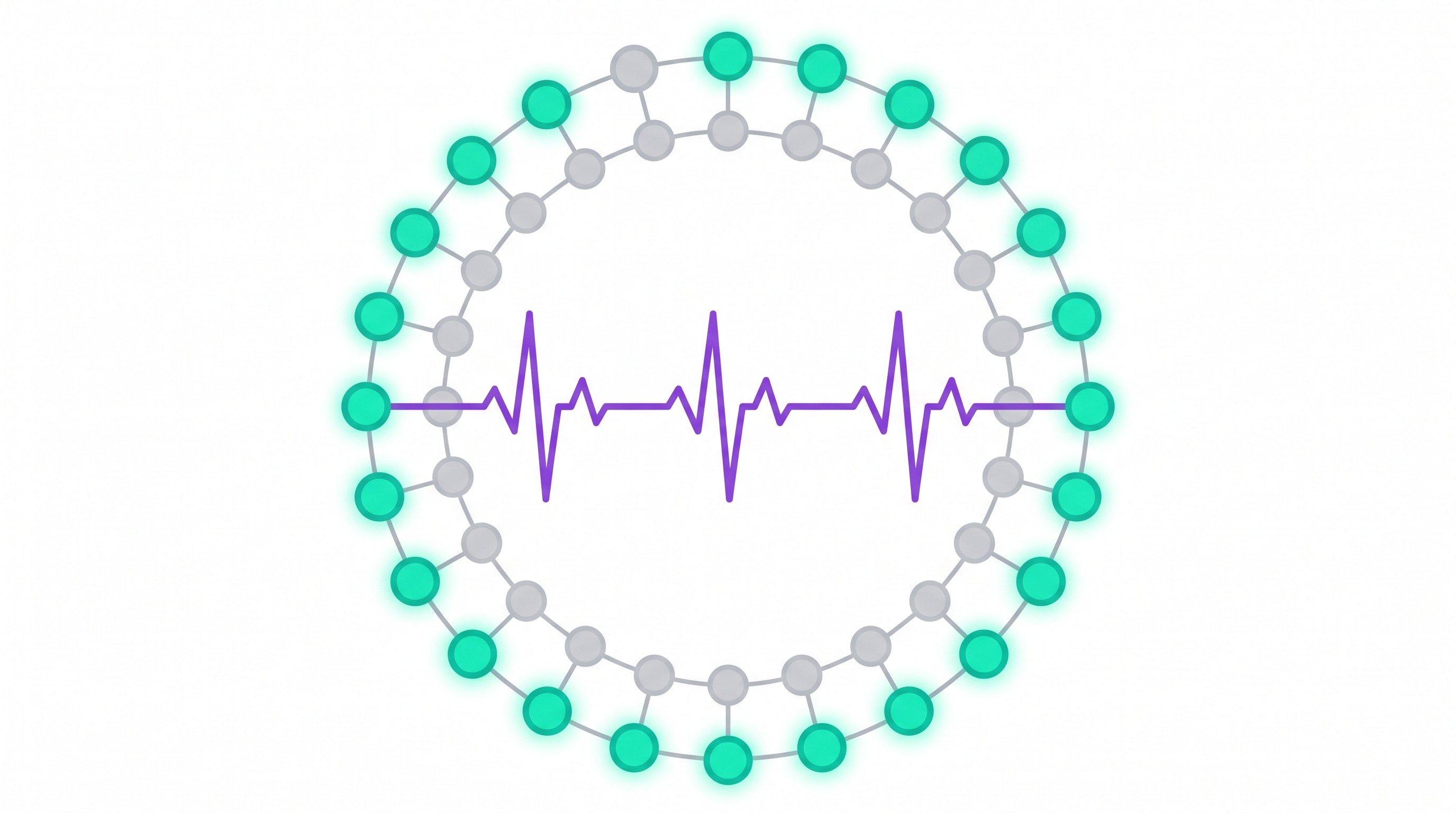
HeartbeatRing — by Meriem
An on-chain coordination game where players must regularly check in to stay alive in a ring.
13 rings on chain at the time of the demo. Epoch lengths. Stake requirements. Live state visible in the UI.
What made it interesting wasn't the game mechanic it was the fact that the contract state was the game state. No backend. No database. The chain was the source of truth.
Both projects demonstrated something the Rootcamp had been building toward since Week 3:
A smart contract isn't just code. It's a system that behaves.
The Credential That Lives On-Chain
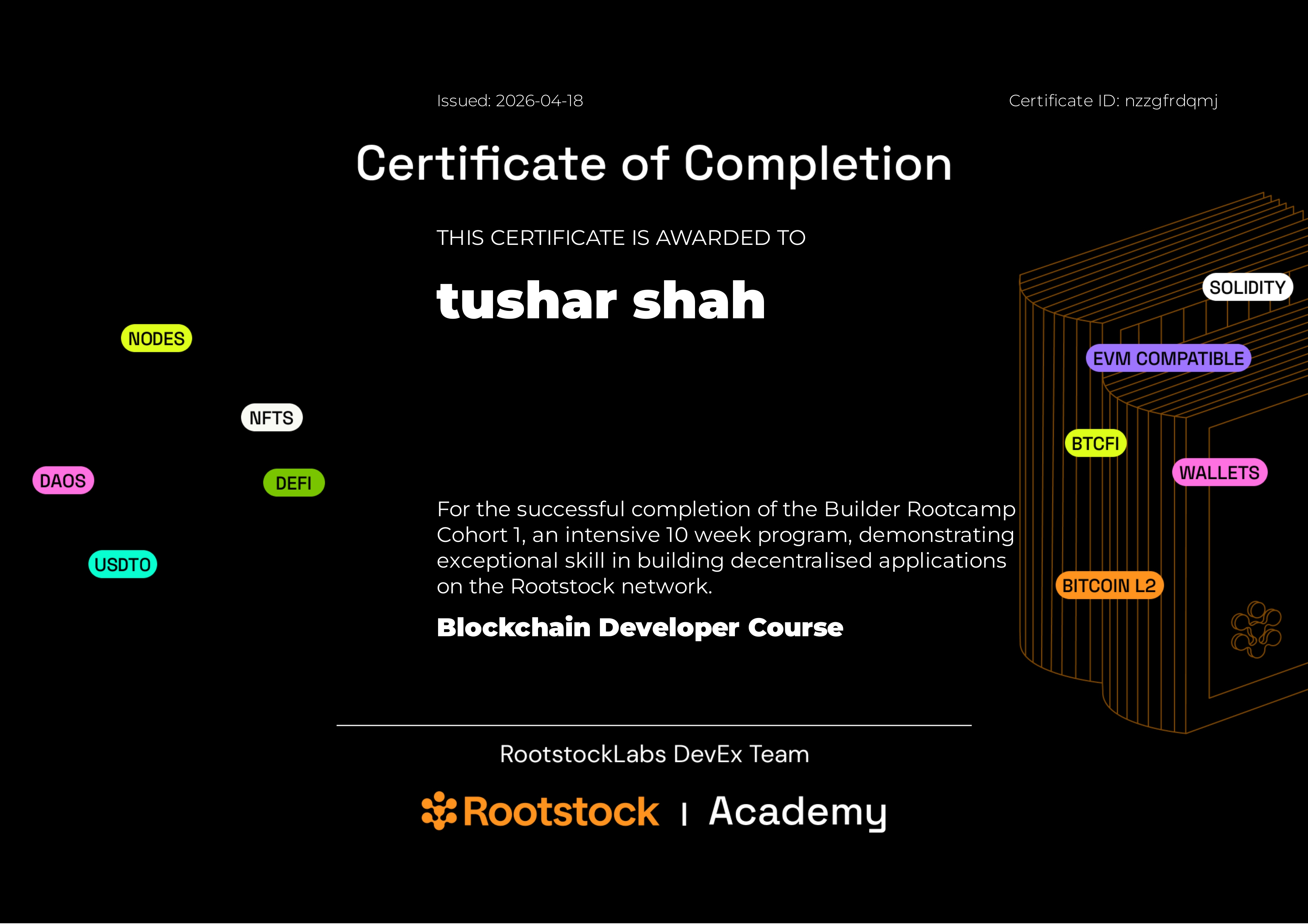
Here's what makes the Rootcamp certification different from every other certificate I've received:
It's not a PDF. It's not just a badge.
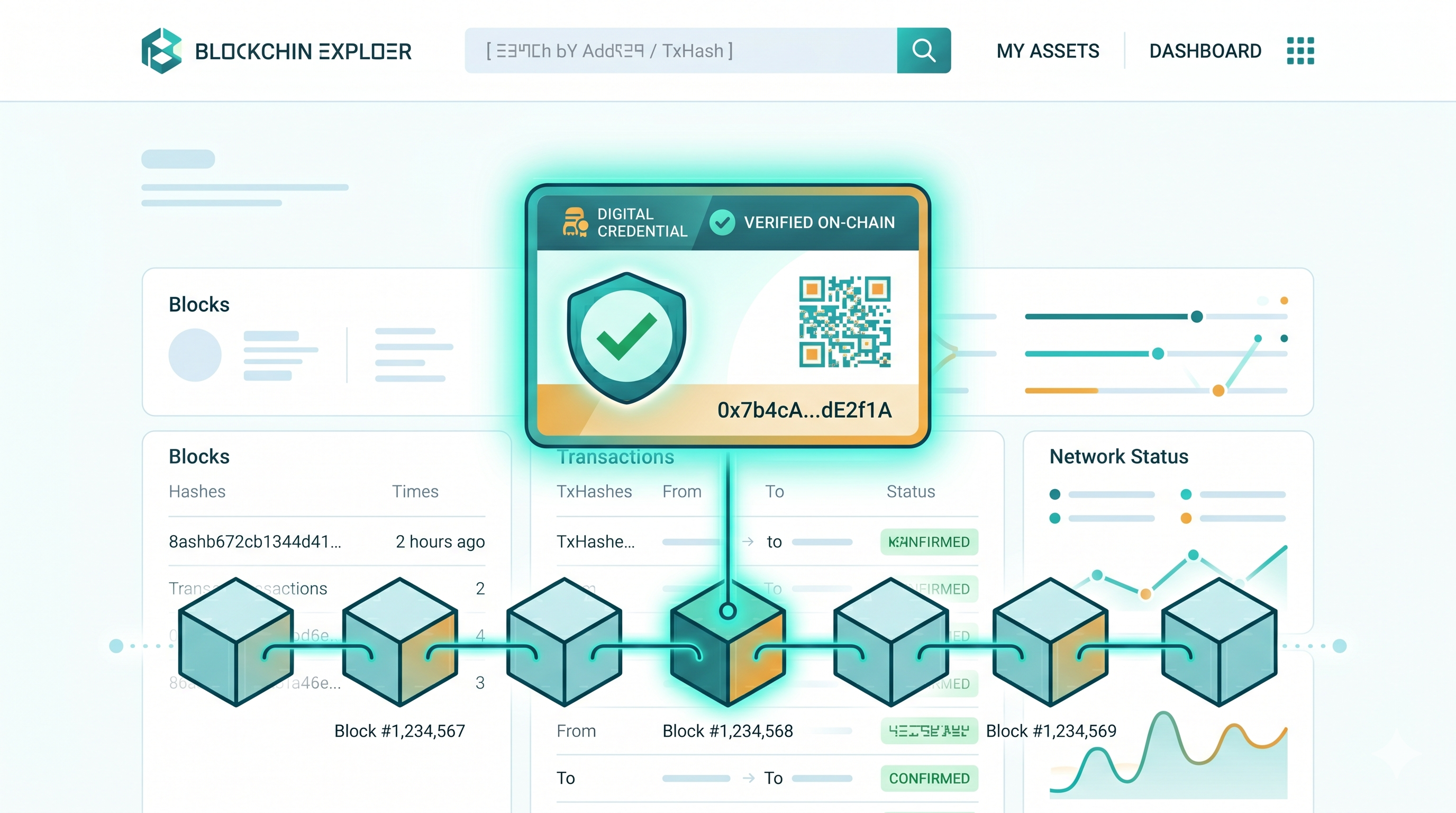
It's an attestation issued via the Rootstock Attestation Service (RAS) - permanently anchored to my wallet address on Rootstock Mainnet.
What that means in practice:
A unique UID issued to your wallet
Verifiable through the Rootcamp Attestation Verifier
Your name in the Hall of Fame - searchable, public, permanent
A QR code linking to your project details and explorer links
An exportable verifiable badge for social media
And then there's the NFT.
The Rootcamp Certified Builder NFT - minted from the RootstockCollective app, directly to Rootstock Mainnet.
Not a collectible. A credential.
The certificate exists because I built something real.
And the proof of that like everything else on this network is immutable.
That's not something a PDF can say.
The Final Steps (And What They Actually Mean)
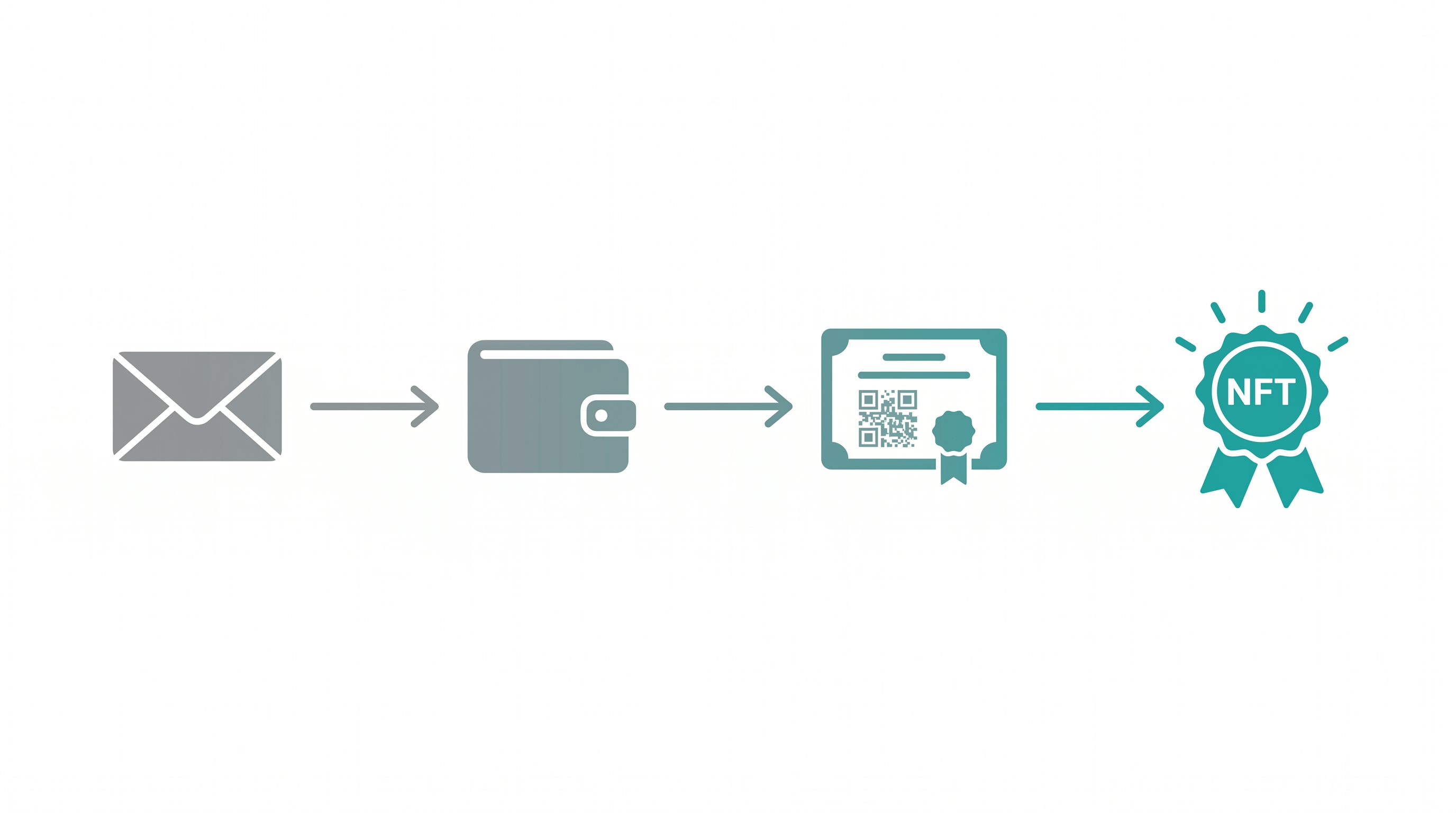
The closing module walked through the last four actions:
Submit your postal address — for the physical swag package.
Submit your Rootstock Mainnet wallet address — this address permanently holds the on-chain credential, the NFT, and receives the Hacktivator rewards on May 15th.
Access your attestation — navigate the verifier, find your name, export your badge.
Mint your NFT — connect to Rootstock Mainnet, a small amount of RBTC covers the transaction.
Each step felt deliberately designed.
The swag grounds it in the physical world.
The wallet address grounds it in the chain.
The attestation makes it permanent. The NFT makes it yours.
And the mandatory completion survey eleven questions felt like the right final act. After twelve weeks of receiving, giving something back.
What Opens After
The closing session didn't just close. It pointed forward.
Four paths available to Rootcamp Certified Builders:
Hacktivator — the open-source contribution marketplace. Build or create content, earn rewards. Already familiar — this blog series was part of it.
Ambassador Program — for builders who want to help expand the Bitcoin DeFi ecosystem. Educate, create, host events, earn rewards. Optional. But worth considering.
RootstockCollective — the DAO. Grants for new projects, Collective Rewards for ongoing contributions, governance participation as a backer.
Rootstock Residency — deeper involvement. The details were shared in the closing session, reserved for certified builders.
Four different ways to stay in the ecosystem.
Four different levels of commitment.
None of them require starting over. All of them build on what the Rootcamp already built.

Looking Back at the Full Arc
Twelve weeks. One cohort. One direction.
| Week | The Shift |
|---|---|
| Week 1 | From user to builder understanding the foundation |
| Week 2 | From concept to infrastructure nodes, RPC, merged mining |
| Week 3 | From functions to systems state machines and correctness |
| Week 4 | From hoping it works to proving it doesn't break |
| Week 5 | From writing code to defending it against attack |
| Week 6 | From deployed to verified making behavior visible |
| Week 7 | From contract to user trust and UX as real concerns |
| Week 8 | From features to systems designing under constraints |
| Week 9 | From design to delivery building under pressure |
| Week 10 | From submitted to defended surviving review |
| Week 11 | From builder to stakeholder understanding the ecosystem |
| Week 12 | From participant to certified the credential that proves it |
Each week assumed the previous one.

The on-chain certificate didn't arrive despite the difficulty. It arrived because of it.
What I'm Taking Forward
Three things this final week made permanent:
The credential is as strong as what earned it
- An on-chain certificate is verifiable by anyone.
- Which means the project it points to the code, the tests, the deployment, the review is the real credential.
- The attestation just makes it permanent.Certification is the beginning of participation, not the end of learning
- The NFT is a key.
- The Hacktivator, the Ambassador Program, the Collective, the Residency those are the doors it opens.
- The Rootcamp was never just a course. It was an entrance exam.Building in public compounds
- Every blog post, every GitHub commit, every verified contract they exist permanently.
- Future work will sit on top of this foundation.
- That's not a metaphor. On Rootstock, it's literally true.
To the Cohort
32 builders. 32 different ideas. One shared finish line.
Whatever you built, a vault, a game, a protocol, a notarizer, a ticketing system, you shipped something real on a Bitcoin-secured network.
That's not nothing. That's the proof of work.

Question for Fellow Rootcampers
Now that it's official what's the first thing you're building next on Rootstock?
Ready to start building on Rootstock? Here’s how you can get involved today:
📖 Explore the Docs – Get started with Rootstock development.
🏆 Check out the Hacker Hub – Learn about past hackathons and upcoming opportunities.
💰 Contribute and Earn with Hacktivator – Build or create content and earn up to $1,000 per contribution.
💬 Join the Community – Connect with other builders on Discord.


